

Main Information
Following the success of our SFIDA Empty Spain trips in 2022 and 2023, it is time to discover more of this fascinating country by bike.
Journey Overview
Beginning in Cardona and finishing in Tortosa, the journey is framed by stays in two of Catalonia’s remarkable Paradores—a fitting introduction to the character of the trip.
From the Pyrenees to the Ebro
The first half of the trip explores the foothills of the Pyrenees—close enough to enjoy their scenery without tackling the higher terrain featured on our dedicated SFIDA Pyrenees trip.
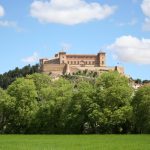
We follow quiet, lesser-travelled roads through Tremp and Boltaña, the spectacular Añisclo Canyon, Jaca and its Citadel, and the impressive Loarre Castle.
In the second half, the scenery changes dramatically. A standout is the Bardenas Reales, a striking semi-desert landscape surprisingly close to the Pyrenees.
Mudéjar architecture shapes the ride from Tarazona to Calatayud before we enter Cariñena, one of Europe’s oldest wine-growing regions.
Historic Highlights and a Memorable Finish
As the journey nears its end, we visit Belchite, devastated during the Spanish Civil War, and stay in monumental Alcañiz. Our final ride follows the Vía Verde del Val de Zafán, one of the country’s finest cycling paths.
The trip concludes in Tortosa, on the banks of the mighty Ebro River—a fitting finale to another epic SFIDA Cycling adventure.
Accommodation and dining: Exceptional hotels and memorable food will be highlights throughout the trip.
Trip Details
- Destination: Spain
- Duration: 9 days
- Dates: 11-20 September 2027
- Hotels: 3-5 stars
- Meals: All meals included
Travel Information
- Arrival: Barcelona (BCN)
- Departure: Barcelona (BCN)
Options and Pricing
- Non-rider discount: 10%
- Rental bike: Available
- Rental e-bike: Available
- Price: €4,750.00
Ride Statistics
- Total distance: 915 km
- Average daily distance: 14,255 km
- Total climbing: 102 km
- Average daily climbing: 1,580 m
MORE INFORMATION
Pricing
- Twin room: 4,750 euros pp
- Single supplement: 850 Euros
- Rental bike: 750.00 Euros
- Rental e-bike: 800.00 Euros
Own bike fee: 200 Euros. This fee applies to guests bringing their own bikes. It helps cover the additional time our mechanics and support team may need to inspect, set up, and repair bikes that arrive in poor condition.
Payment terms
A deposit of 1,000 Euros is due at the time of booking. The remaining balance must be paid no later than 120 days before the trip begins.
Included
- Nine nights of accommodation in 2–4-star hotels.
- Cultural visits.
- One SFIDA Cycling jersey.
Meals included
- Nine breakfasts.
- Nine lunches.
- Nine dinners.
Not included
- International flights.
- Travel insurance.
- Personal hotel extras, such as minibar and spa charges.
- Tips for staff.
Support
- Experienced ride leaders and at least one mechanic.
- A staff-to-client ratio of 1:4.
- Fully equipped support vans available throughout each ride.
- On-ride nutrition and supplies, including gels, energy bars, drink mix, water, fruit, tools, pumps, spare tubes, and tyres.
- A professional first aid kit.
Cancellation policy
In response to post-COVID changes in international travel, and in line with most hotels’ terms and conditions, our cancellation policy is as follows:
- 120 or more days before the trip starts: Your deposit will be refunded, minus any non-reimbursable expenses.
- 90 or more days before the trip starts: You will receive a partial refund of the trip cost, less the 800 Euros cancellation fee, any non-recoverable hotel charges, and any other costs already incurred in preparing the trip.
- Less than 60 days before the trip starts: No refund or credit towards any future trips is available.
Travel insurance
We strongly recommend purchasing travel insurance as soon as you pay your deposit and book your international flights. Please make sure your policy covers the following:
- International flights.
- Reimbursement of amounts paid if you need to cancel for any reason.
- Damage to your rental bike (see our terms and conditions).
Reserving your spot
To reserve your place, you must pay the full deposit. Because hotels are now stricter about holding rooms for groups, we cannot hold or confirm a spot until we receive the deposit.
Itinerary
Arrival in Barcelona
After pickup at Barcelona Airport, we will transfer to our hotel in Cardona, approximately a 90-minute drive away.
On arrival, there will be time for lunch, bike assembly, and preparation for the riding days ahead.
Opening Ride
In the early afternoon, we will set out on a short loop through the countryside around Cardona—an ideal introduction to the trip.
We will stay at the Parador de Cardona, the first of several remarkable accommodations featured on this journey.
Day 1 Ride Details
- Route: Day 1 route
- Distance and climbing: 33 km / 620 m
- Hotel: Parador de Cardona
Our second ride explores the quiet roads of northern Catalonia, just below the Pyrenees.
Our first stop is the Santuari del Pinós, reached after a short climb and offering an excellent vantage point over the surrounding landscape.
From there, we continue towards Ponts in the Noguera county, one of Catalonia’s finest areas for cycling.
Beyond Ponts, a pair of climbs leads us to Tremp, our destination for the day.
Tremp is the largest town in this part of the Catalan Pyrenees, with several places of interest in its historic centre.
Day 2 Ride Details
- Route: Day 2 route
- Distance and climbing: 125 km / 2,205 m
- Climbs: Santuari del Pinós, Alt del Tossal de la Santa, Coll de Comiols
- Hotel: Hotel Segle XX Tremp
Today’s route follows the Catalan and Aragonese Pre-Pyrenees.
The day begins with the winding ascent of Coll de Perves. This spectacular road leads to Pont de Suert, the final town in Catalonia before we cross into Aragón.
After entering Aragón, the landscape becomes more dramatic. Puerto de Bonansa and the Obarra Gorge offer some of the most beautiful cycling of the trip.
Aínsa and the Road to Boltaña
Before reaching Boltaña, we will ride through Aínsa, once the capital of an independent kingdom before becoming part of the Kingdom of Aragón in the 11th century. The town is a remarkable example of medieval urban design.
Aínsa is designated a Historic-Artistic Site. Its harmonious old quarter features closely packed, uniform houses, the slender tower of the Collegiate Church, and a vast castle enclosure almost as large as the village itself. Much of the surrounding wall remains intact, and the town’s monuments evoke its medieval past.
From Aínsa, we continue to Boltaña for the night.
Tonight’s accommodation is a beautifully renovated 17th-century monastery.
Day 3 Ride Details
- Route: Day 3 route
- Distance and climbing: 135 km / 2,650 m
- Climbs: Coll de Perves, Puerto de Bonansa, Puerto de Egea, Collado de Foradada.
- Hotel: Hotel SPA Monasterio de Boltaña
Today’s ride is one of the most spectacular of the trip. We begin by returning to Aínsa before continuing to Escalona.
Añisclo Canyon
From Escalona, we ride through the stunning Añisclo Canyon. For much of the 24 km ascent to Alto de Fanlo, this dramatic cliffside road is open to traffic in only one direction. This is a true natural wonder.
Broto and the Ordesa Region
After the canyon, we continue to Broto, the gateway to Ordesa y Monte Perdido National Park, one of Spain’s most important national parks. We will stop here for lunch.
From Broto, we cross Puerto de Cotefablo and continue to Biescas, an important town in the Aragonese Pyrenees.
Day 4 Ride Details
- Route: Day 4 route
- Distance and climbing: 84 km / 2,300 m
- Climbs: Añisclo Canyon, Alto de Fanlo, Puerto de Cotefablo
- Hotel: Hotel Tierra de Biescas
Today we leave the pre-Pyrenees and begin our journey south, riding from Biescas to Sabiñánigo through the lower Tena Valley.
From the Tena Valley to Jaca
As we travel south, the landscape begins to change, and the first vineyards come into view.
Sabiñánigo is an important town on the route to France. It also hosts Spain’s largest gran fondo, the Quebrantahuesos, typically held in mid-June and attracting more than 11,000 participants.
Jaca, Puerto de Oroel and Loarre
We continue to Jaca, arriving in time for a mid-morning coffee and a visit to the Citadel. The town is also notable for its historic military architecture.
From Jaca, we climb Puerto de Oroel before continuing towards the Mallos de Riglos. Their distinctive rock formations remain visible for several kilometres along the route.
We finish the day in the village of Loarre, near its impressive castle, which we will visit either in the late afternoon or the following morning.
Day 5 Ride Details
- Route: Day 5 route
- Distance and climbing: 107 km / 1,715 m
- Climb: Puerto de Oroel
- Hotel: Hospedería de Loarre
Loarre Castle and the Road South
After visiting the impressive castle above Loarre, we begin our ride towards Ejea de los Caballeros, just beyond the halfway point of today’s route. This historic crossroads has been known by around six different names over the centuries, reflecting its importance to the many civilisations that passed through the region.
Entering Navarra and the Bardenas Reales
A few kilometres before reaching Tudela, we enter the region of Navarra in spectacular fashion through the Bardenas Reales, a striking semi-desert landscape only 70 km from the Pyrenees.
The Bardenas Reales is one of the highlights of the trip. After arriving at the hotel and freshening up, we will take a private 4×4 tour through this extraordinary landscape.
Day 6 Ride Details
- Route: Day 6 route
- Distance and climbing: 102 km / 620 m
- Hotel: AC Hotel Ciudad de Tudela
Tarazona and its Mudéjar Heritage
After 25 km, we reach Tarazona, one of Aragón’s most beautiful yet lesser-known towns, set against the backdrop of the Moncayo mountain range.
Conquered several times throughout its history, Tarazona has a remarkable centre where Christian, Jewish, and Islamic heritage coexists. It is a fine example of Mudéjar architecture, which blends Islamic ornamentation with Christian building traditions. We will encounter more examples of this distinctive style in several towns along today’s route.
Through the Moncayo Foothills
From Tarazona, we ride through the lower foothills of the Moncayo range, with the medieval Castle of Trasmoz as the principal landmark. We then continue to Calatayud, a fascinating town whose history stretches back to Roman times, where we will stay in another remarkable hotel.
Day 7 Ride Details
- Route: Day 7 route
- Distance and climbing: 138 km / 1,970 m
- Climb: Puerto de la Chabola
- Hotel: Hotel Monasterio Benedictino
Today’s ride continues the trip’s ever-changing journey through distinctive landscapes, cultures, food, and wine.
The Cariñena Wine Region
We enter the Cariñena wine region via Puerto de Aguarón. At the foot of the descent lies Aguarón, the first town on our route within the denomination.
Cariñena’s wines were already prized by the Romans, making this one of Europe’s oldest wine-growing regions.
We ride through the heart of the region, travelling from Aguarón to Cariñena before leaving via Villanueva de Huerva.
Belchite and its Civil War History
Belchite lies in one of Spain’s driest regions. Its proximity to the Ebro River gave it strategic importance during the Spanish Civil War, and heavy fighting left the town almost destroyed.
A new town was built nearby after the war. Today, the ruins of old Belchite stand as a stark reminder of the conflict. We will take a walking tour through the historic site.
Transfer to Alcañiz
After visiting Belchite, we transfer to Alcañiz, one of Aragón’s most impressive historic towns. Tonight, we stay at the Parador de Alcañiz.
Day 8 Ride Details
- Route: Day 8 route
- Distance and climbing: 95 km / 1,355 m
- Climb: Puerto de Aguarón
- Hotel: Parador de Alcañiz
Our final ride follows much of the Vía Verde del Val de Zafán, one of Spain’s finest cycling paths.
From Aragón to Catalonia
Leaving Alcañiz, we spend the first half of the ride in Aragón before crossing into Catalonia and continuing towards Tortosa.
The greenway follows a former railway line built to connect inland towns with the Ebro Delta. Along the route, we pass old stations—some now repurposed as rest stops—as well as numerous tunnels and bridges.
Horta de Sant Joan and Tortosa
Back in Catalonia, we stop for lunch in Horta de Sant Joan. This quiet town was visited by Pablo Picasso in the late 1890s while he was staying with a local friend.
Our ride ends in Tortosa, a historic city on the banks of the mighty Ebro River—and a fitting place to conclude another epic SFIDA Cycling journey.
Day 9 Ride Details
- Route: Day 9 route
- Distance and climbing: 97 km / 800m
- Hotel: Parador de Tortosa
After breakfast, we will transfer to Barcelona Airport (BCN).
We expect to arrive by noon, so please plan your onward travel accordingly.
